Myth or Reality?
A little bit of both.
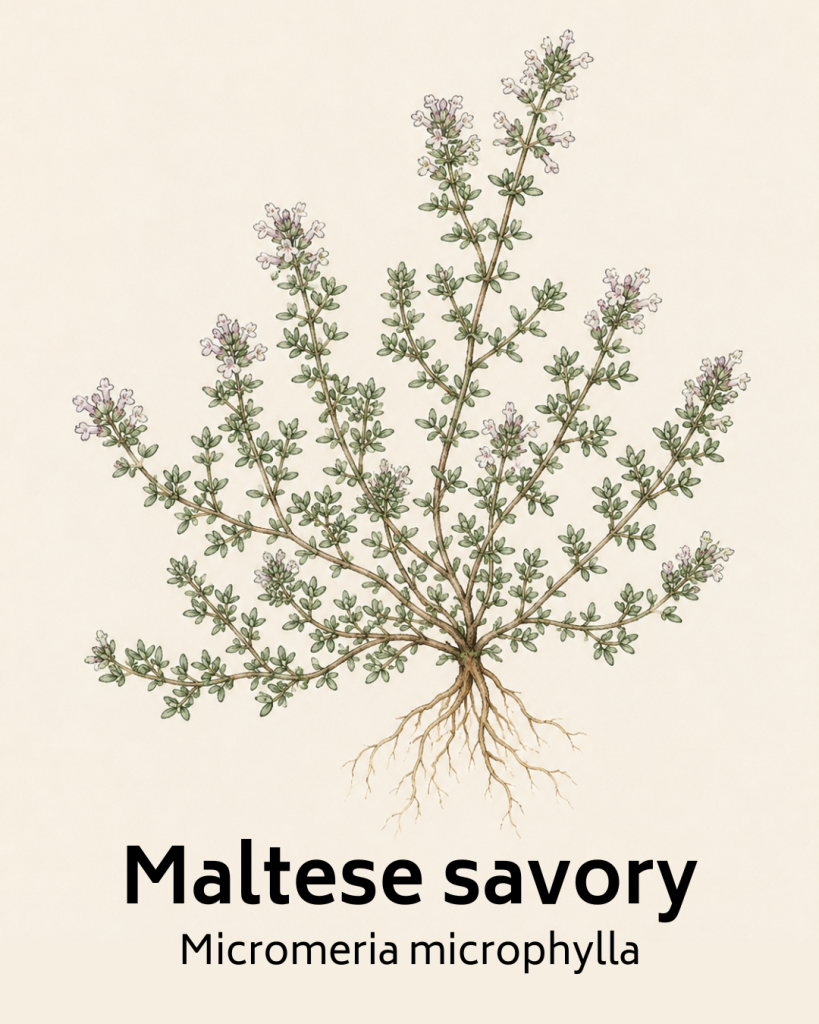
People once believed that Maltese savory (Micromeria microphylla) could physically break kidney stones apart.
Traditional herbal knowledge often begins with careful observation. Earlier generations noticed that this small aromatic plant seemed helpful in cases of urinary discomfort and problems related to kidney or bladder stones. Over time, people tried to explain what they observed using the knowledge available to them. This is how Maltese savory came to be known by names such as “stone-splitter” or “rock-breaker”.
Today, researchers approach these traditional beliefs more cautiously. Modern understanding suggests that Maltese savory was probably not valued because it literally “broke” stones, but because it may have supported the body in other ways. In traditional Maltese practice, the herb was often prepared as an infusion or decoction, particularly in relation to urinary discomfort and fluid balance.
Scientists studying plants in the Micromeria genus have identified naturally occurring compounds such as rosmarinic acid, flavonoids, and aromatic essential oils rich in monoterpenes, including menthone and pulegone. These substances are being investigated for their antioxidant, antimicrobial, digestive-supporting, and anti-inflammatory properties. Some of these biological effects may help explain why this tiny Mediterranean herb was valued for generations.
Maltese savory grows quietly in dry limestone landscapes, often hidden among rocks under strong Mediterranean sunlight. Small aromatic plants like this formed part of a long Mediterranean tradition sometimes described as a “wild herb culture” – communities learning to recognise and use naturally growing plants in everyday life.
Folk medicine and scientific medicine do not always describe plants in the same way. But when traditional knowledge and modern research are considered together, they can help us better understand how people observed nature, cared for their health, and passed practical wisdom from one generation to the next.