Mediterranean Survivor
Why does Maltese savory stay so small?
Because it has adapted to a dry, rocky environment.
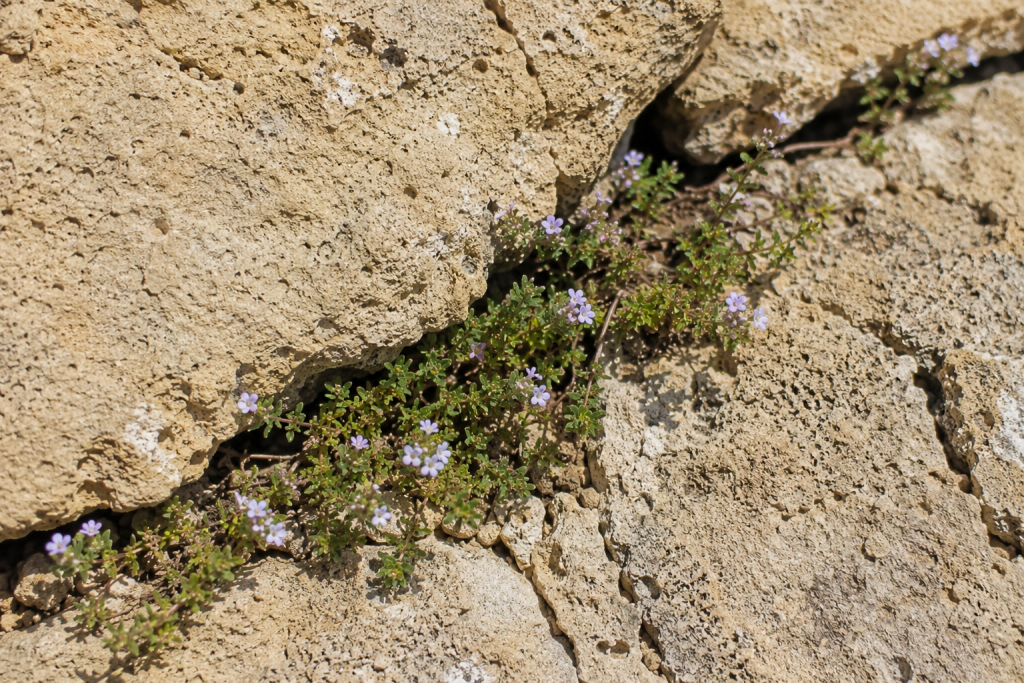
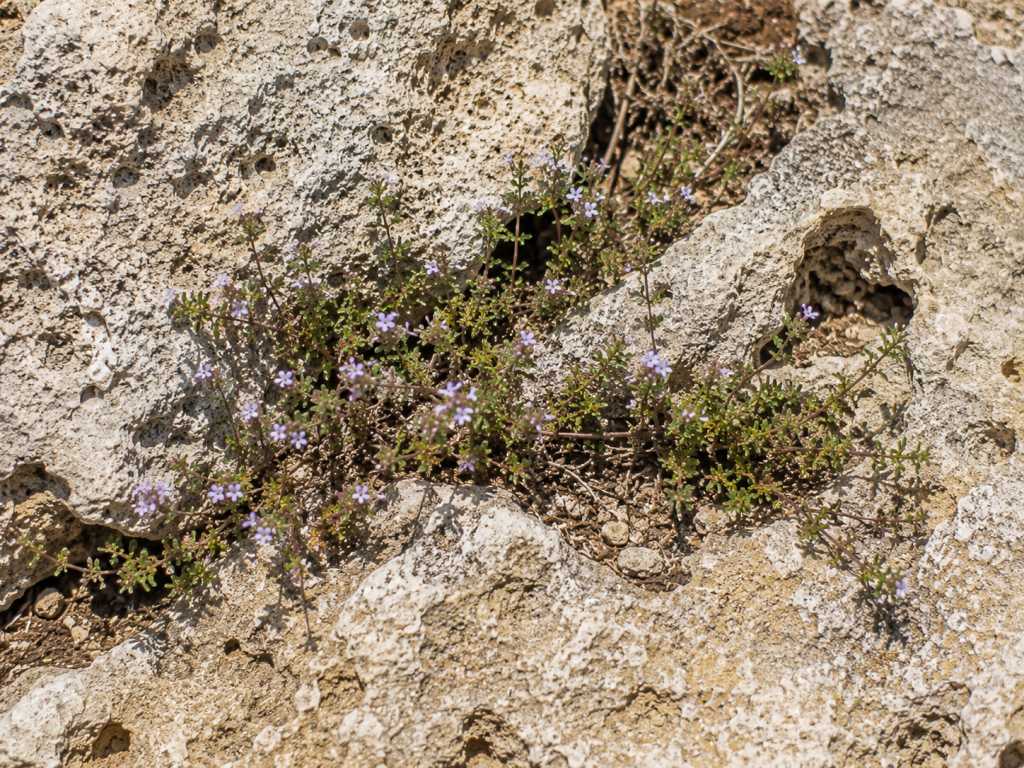
Maltese savory (Micromeria microphylla) grows naturally in one of the Mediterranean’s harshest environments. It thrives in dry, rocky places, limestone cracks, exposed slopes, and sunlit landscapes where water may be scarce for long periods.
At first glance, the plant may look fragile. In reality, its small size is part of its survival strategy.
Its tiny leaves help reduce water loss during Malta’s long, hot summers. Growing close to the ground offers protection from strong winds and intense sunlight. Its root system is also adapted to finding moisture in poor, rocky soils where larger plants might struggle to survive.
Like many other members of the mint family (Lamiaceae), Maltese savory contains aromatic essential oils that give the plant its distinctive scent. These compounds may also play a role in the way Mediterranean aromatic plants adapt to their environment. Scientists studying Micromeria species have identified naturally occurring compounds such as monoterpenes, phenolic compounds, and flavonoids, which contribute to the plant’s biological properties.
For generations, small aromatic plants growing naturally across Mediterranean landscapes formed part of everyday life. People learned where these plants grew, when they flowered, and how changing seasonal conditions influenced their development. This connection between landscape, climate, and traditional plant knowledge forms part of what researchers sometimes describe as a Mediterranean “wild herb culture”.
What may at first look like a tiny, easily overlooked herb is actually a highly adapted Mediterranean survivor – shaped by sunlight, limestone, drought, and centuries of life alongside people.