Understanding Hypericum perforatum with care
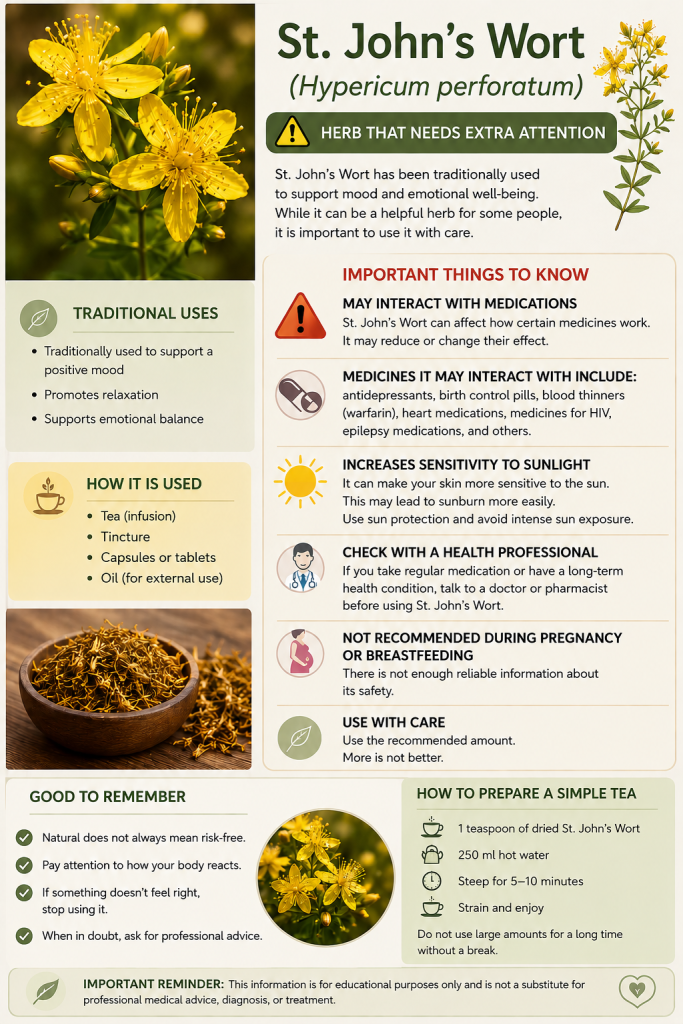
St John’s Wort (Hypericum perforatum) is one of Europe’s best-known traditional medicinal plants. For generations, people have used its bright yellow flowers in herbal preparations, oils, and teas. In many traditions, it became associated with emotional wellbeing, difficult periods of life, and maintaining inner balance during times of stress.
Modern science has also studied this herb extensively. Researchers have identified active compounds such as hypericin and hyperforin, which may influence how the body processes certain substances. This is exactly why St John’s Wort deserves extra attention. A plant can be valuable and still require careful use.
One of the most important things to understand is that St John’s Wort may interact with medicines. Unlike many herbal teas used occasionally at home, Hypericum perforatum can influence how the body breaks down certain medications. It can affect natural processes in the liver and digestive system that help the body process medicines. As a result, some medications may become less effective, while in other cases the risk of unwanted effects may increase.
Particular caution is recommended for people taking medicines such as:
- antidepressants;
- contraceptive pills;
- anticoagulants or other blood-thinning medicines;
- medicines used after organ transplantation;
- certain heart medications;
- some HIV medicines;
- epilepsy medicines;
- medicines that need to remain at very stable levels in the body.
Because of these interactions, health professionals generally advise people who take regular medication to discuss the use of St John’s Wort with a healthcare professional before starting it. This herb is one of the clearest examples of why “natural” does not automatically mean “risk-free”.
Another important point is increased sensitivity to sunlight. Some people may become more sensitive to strong sunlight while using preparations containing Hypericum perforatum. This does not happen to everyone, but extra care with prolonged sun exposure may be advisable, particularly during the summer months or while on holiday.
People sometimes assume that herbal tea, herbal oil, capsules, and concentrated extracts all work in the same way. They do not. Different preparations may contain different amounts of active substances. Concentrated products can behave differently from a simple traditional infusion. The quality and composition of products may also vary.
Extra caution is also recommended:
- during pregnancy;
- while breastfeeding;
- when taking several medicines regularly;
- before surgery or other medical procedures;
- when combining several herbal products without professional guidance.
Traditional herbal knowledge remains valuable. Plants such as St John’s Wort remind us that traditional wisdom and modern science do not need to compete – they can complement and support one another. By considering both tradition and scientific evidence, we can make safer, better-informed choices for ourselves and for the people we care about.