
The Garden’s Golden Flower – More Than Just a Medicinal Herb
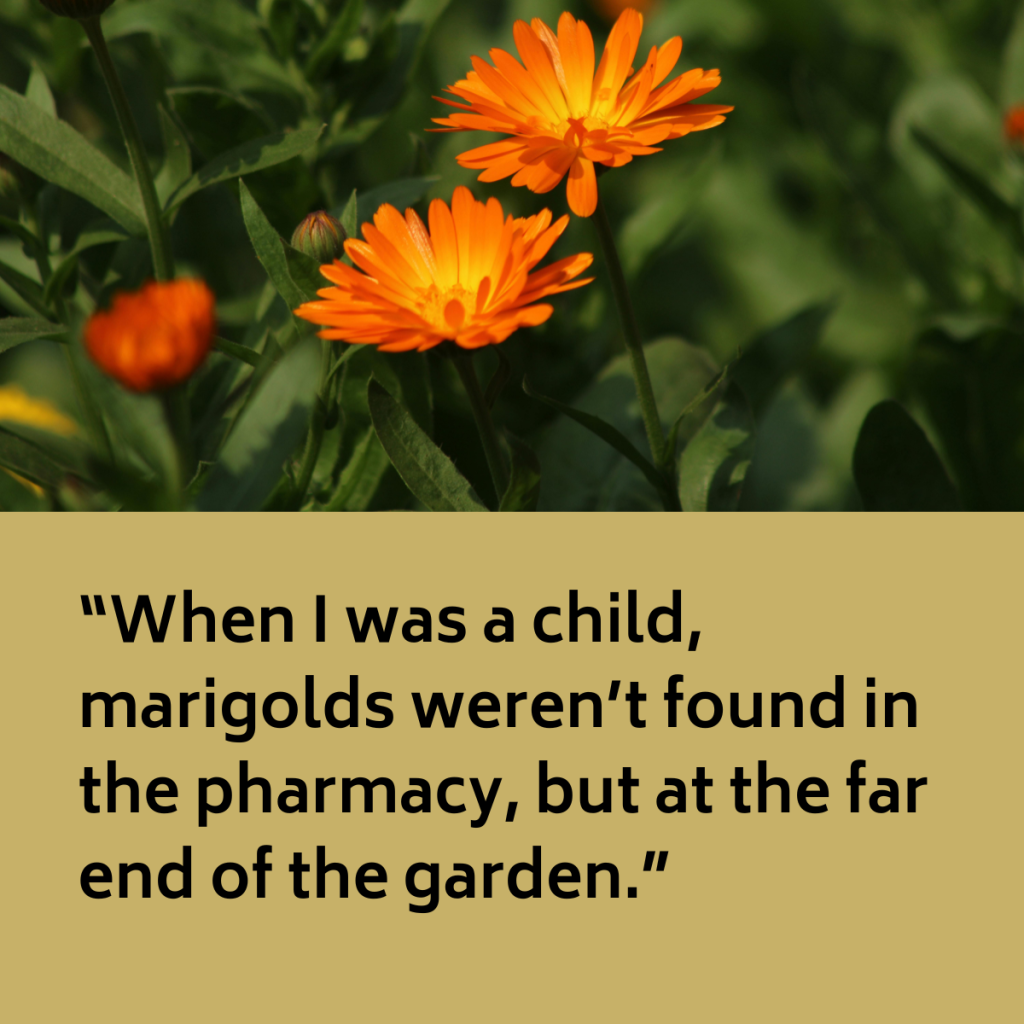
The marigold (Calendula officinalis) has been one of the best-known European medicinal plants for centuries. In folk medicine, it was primarily used to treat skin problems, minor wounds, scrapes, and to soothe inflammation. According to modern phytotherapy research, the plant contains flavonoids, carotenoids, and essential oils, which may contribute to skin regeneration and have anti-inflammatory effects.
At the same time, marigold was not just a “home remedy.” In Mediterranean and Central European gardens, it was often planted alongside other plants because it was believed to help keep certain pests away. Many older people still remember that marigolds were a natural part of the garden—they weren’t considered special plants, but simply part of everyday life.
People knew their gardens, observed nature, and passed their experiences on to one another. They incorporated a great deal of practical knowledge into their daily lives.