Why essential oils deserve a different kind of respect
Many medicinal and culinary herbs are part of everyday life. We drink mint tea when we feel uncomfortable, enjoy lavender for relaxation, season food with oregano and thyme, or use rosemary and sage in traditional household practices. Because these plants feel familiar and natural, it is easy to assume that their concentrated forms work in exactly the same way.
They do not.
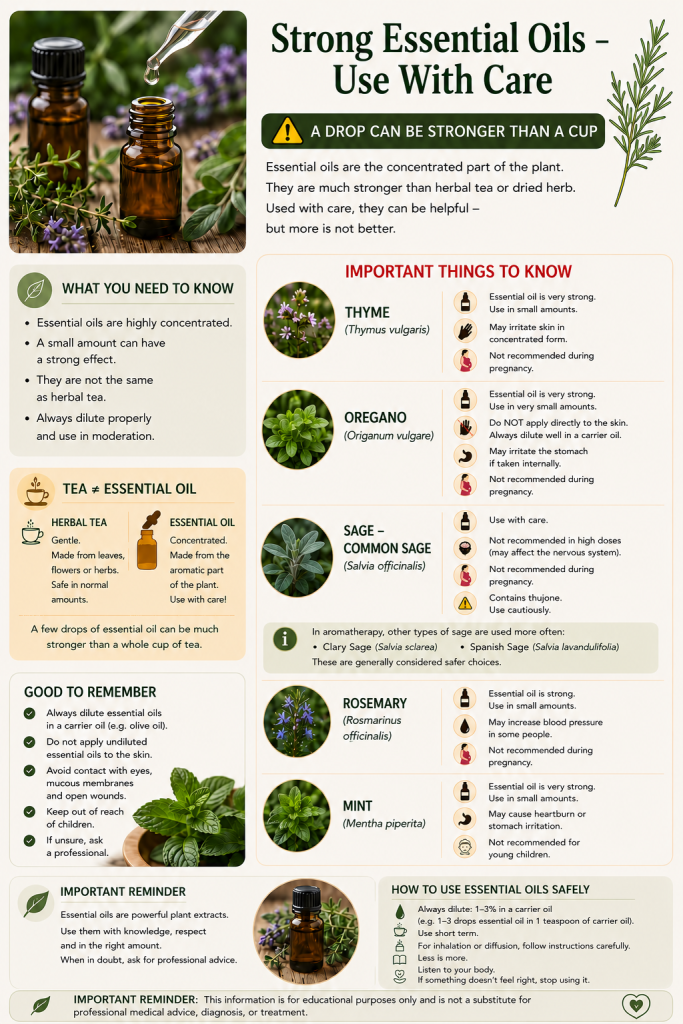
Essential oils are not simply “stronger herbal teas”. They are highly concentrated plant extracts that contain much larger amounts of active compounds than most traditional herbal preparations. Producing a small bottle of essential oil may require large quantities of plant material. This concentration changes how a plant behaves and how carefully it should be used.
A useful way to think about it is simple:
A cup of herbal tea and a drop of essential oil are not the same thing.
Herbal teas are usually prepared with water and contain a milder mixture of plant compounds. Essential oils, in contrast, contain highly concentrated volatile aromatic substances. Because of this, only very small amounts are usually needed.
Some essential oils deserve extra attention:
Thyme (Thymus vulgaris)
Thyme essential oil is rich in powerful compounds that may irritate sensitive skin when concentrated.
Oregano (Origanum vulgare)
Oregano essential oil is considered particularly potent and may cause irritation if used incorrectly.
Sage (Salvia officinalis)
Sage essential oil contains naturally occurring compounds that should be used thoughtfully and with particular care.
Rosemary (Rosmarinus officinalis)
Rosemary essential oil has traditionally been valued, but concentrated forms require moderation and careful use.
Lavender (Lavandula angustifolia)
Lavender is often considered a gentle herb, yet its concentrated essential oil may affect sensitive individuals differently.
Peppermint (Mentha piperita)
Peppermint essential oil may feel familiar because mint tea is common in many homes, but concentrated peppermint oil behaves very differently from a cup of herbal tea.
Several simple safety principles can help:
- More is not always better.
- Concentrated essential oils should usually be diluted before being applied to the skin.
- Essential oils are generally not intended to be used in the same way as herbal teas.
- Sensitive skin may react differently.
- Long-term health conditions and regular medication use require extra consideration.
- When in doubt, it is advisable to seek professional advice.
Traditional herbal knowledge teaches us not only which plants to use, but also how to use them wisely. Essential oils are a particularly good reminder that concentration matters. Sometimes a single small drop can contain the concentrated compounds of many leaves, flowers, or stems – and understanding that difference is part of using herbal knowledge safely and responsibly.